1. Required LO phase noise equation for HF Receiver and Transceiver
Emmanuel Ngompe described reciprocal mixing effects for the required LO phase noise equation,
modified for HF receiver configurations which direct sampling SDR, direct conversion, single
conversion, double conversion and triple conversion.
L(Δfc) [dBc/Hz] = Sdes-Sbl(Δfc)-C/Ireq-10log(BW)-MN
L(Δfc): phase noise in dBc/Hz at Δfc away from the carrier
[dBc/Hz] Offset 1kHz
Sdes: desired signal level in dBm (or dBV)
[dBm]
Sbl(Δfc): magnitude of the blocker (interferer signal) in dBm (or dBV)
0dBm
C/Ireq: minimum magnitude of the required carrier-to-interference ratio
at the baseband processor input in dB
10dB
BW: receiver noise bandwidth
Basic condition: 0.5kHz
MN: Mixer Noise [dB] Depends on receiver configuration
Direct Sampling SDR : 0
Direct conversion :0
Single conversion : 3
Double conversion : 6
Triple conversion : 9
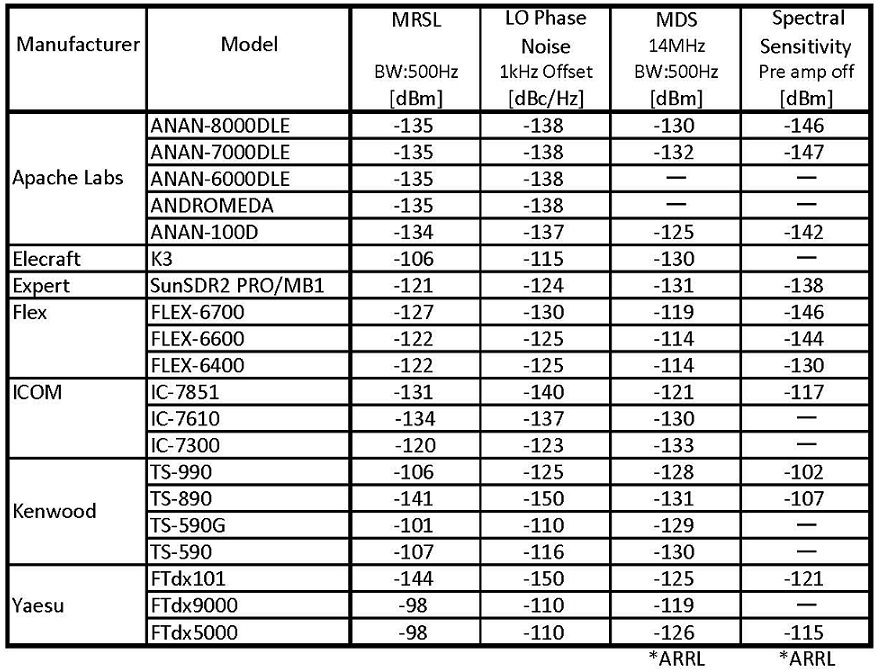
Table 1. MRSL, LO or Clock Phase Noise and others comparisons
2. S1 Signal Level and required LO phase noise
S1 Signal Level (-121dBm) plus margin -6dB
L(Δfc) [dBc/Hz] =-121-10-(0,3,6,9)-6
Direct Sampling SDR & Direct conversion:-137dBc/Hz, Offset 1kHz
Single conversion :-140dBc/Hz, Offset 1kHz
Double conversion :-143dBc/Hz, Offset 1kHz
Triple conversion :-146dBc/Hz, Offset 1kHz
3. Required LO phase noise to applicable HF receivers and transceivers as followings
3-1. Direct Sampling SDR
1) Apache Labs ANAN-8000DLE: -138dBc/Hz Offset 1kHz
2) Apache Labs ANAN-7000DLE: -138dBc/Hz Offset 1kHz
3) Apache Labs ANDROMEDA: -138dBc/Hz Offset 1kHz
4) Apache Labs ANAN-6000DLE: -138dBc/Hz Offset 1kHz
Those have external 10MHz reference input and improve phase noise.
3-2. Single conversion
1) Yaesu FTdx101: -150dBc/Hz Offset 1kHz
NO external 10MHz reference input and don’t have improvement for phase noise.
3-3. Double conversion
1) Kenwood TS-890: -150dBc/Hz Offset 1kHz
It has external 10MHz reference input and improves phase noise.
3-4. Triple conversion
They don’t exist applicable triple conversion.

Table 2. LO & Clock Phase Noise Comparisons
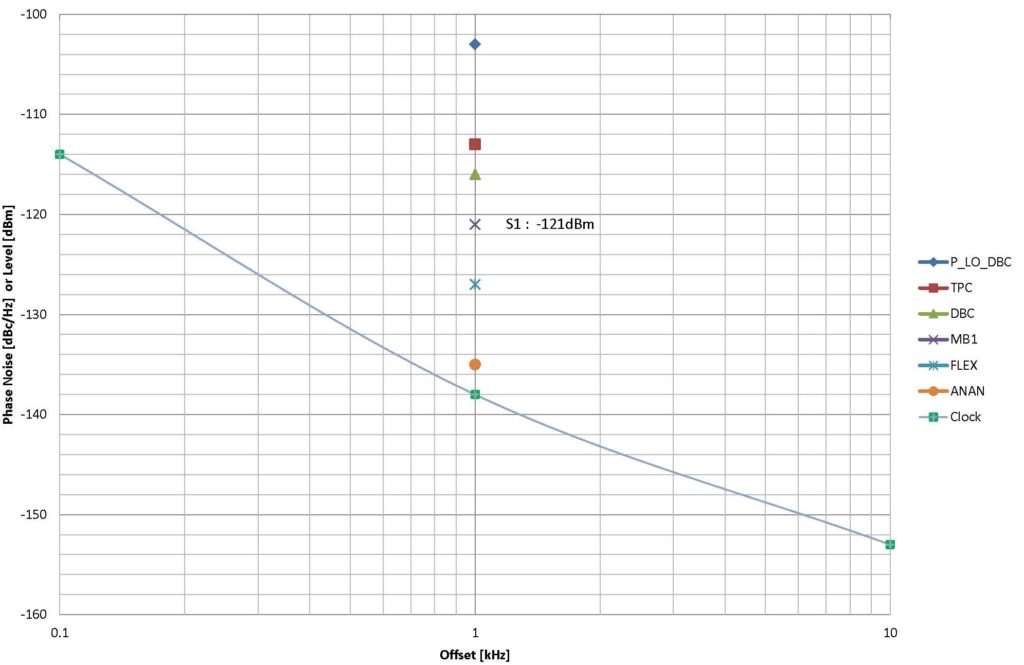
Graph 1. MRSL, S1 Signal Level & Clock Phase Noise
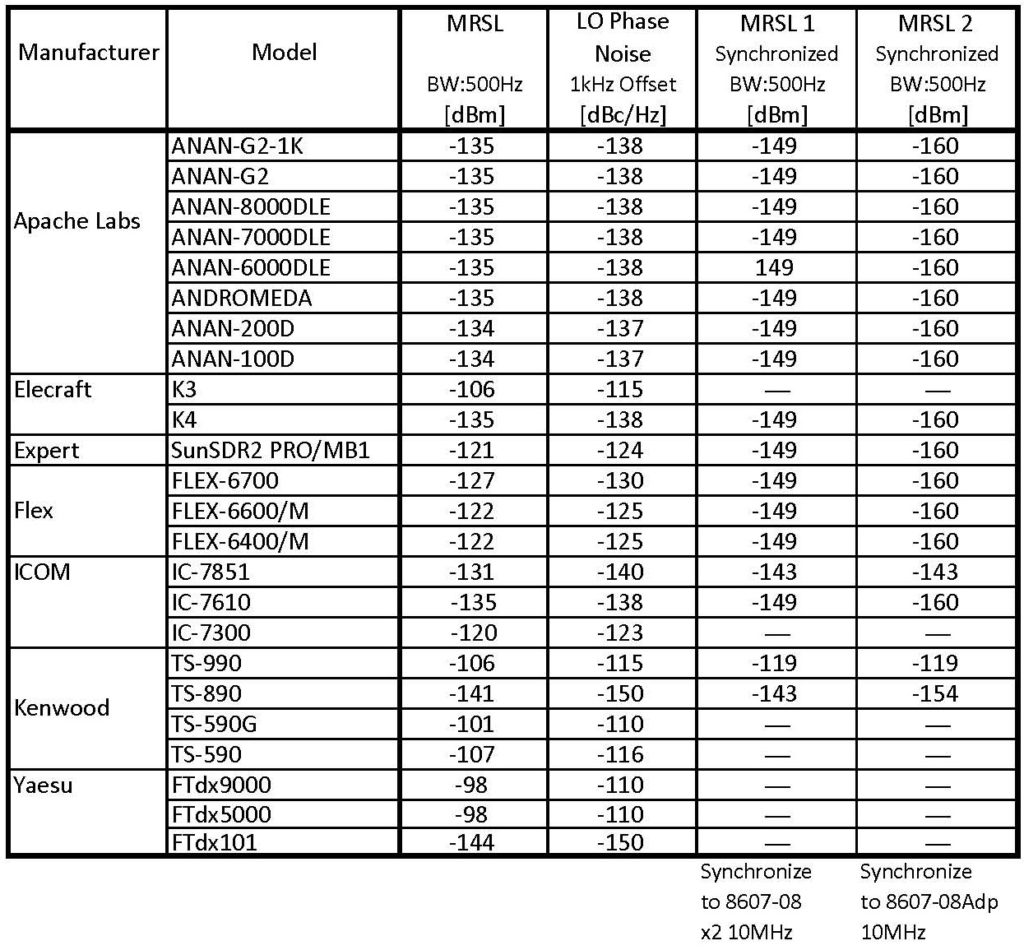
Table 3. Phase Locked Ultra Low Phase Noise Disciplined OCXO
4.Another considerations
4-1. Transmit IMD
Those transceiver require consideration of transmit IMD, very important in transmission.
Transmit IMD requires under -40dB then don’t interfere to other stations and good signal.
Apache Labs SDR have predistortion and under -60dB of tramsmit IMD, those have very good
pure signal and almost non-splatter.(ANAN-8000DLE have under -70dB of transmit IMD)
ICOM, Kenwood and Yaesu don’t have predistortion and over -30dB of transmit IMD , thus
those have interfere to other stations.
4-2. Transmit composite noise
And also those transceiver require limitation of transmit composite noise, extremely important
in transmission that especially interfere other local stations and multi band systems.
4-2-1. Minimum requirement of transmit composite noise
Minimum requirement of transmit composite noise are less than -130dBc/Hz at 10kHz offset
frequency and less than -135dBc/Hz at 100kHz offset frequency.
4-2-2. Normal use requirement of transmit composite noise
Normal use requirement of transmit composite noise are less than -135dBc/Hz at 10kHz offset frequency
and less than -140dBc/Hz at 100kHz offset frequency.

Table 4. HF Transceiver comparisons
References
1. Emmanuel Ngompe described reciprocal mixing effects to published in APPLIED MICROWAVE &
WIRELESS Jan.1999 pages between 54 page and 58 page “Computing the LO Phase Noise Requirements in a GSM Receiver”.
2. Ali M. Niknejad described Mixer Noise to published EECS242 pages between 2page and 7page ” Mixer
Noise and Design”
・
If you have a question please E-mail to ja2gxu@cpost.plala.or.jp (@ → @)