- 1.Low phase noise LO or Clock for SSB transmission specification(Comparison with FM Broadcast)
- Low phase noise LO or Clock for SSB transmission specification refer to Table1 and 2
- Low phase noise LO or Clock for SSB receiving specification equivalent to SSB transmission specification.

Table 1. SSB transmission specification(Comparisons with FM Broadcast)

Table 2. SSB transmission specification
- 1-1. Low Phase Noise requirements for Local Oscillator or Clock Oscillator
- 1) Band width of Audio Frequency depend on phase noise of LO or CO
- Clock Oscillator’s Low Phase Noise TCXO in the SDR such as ANAN-8000DLE, ANAN-7000DLE, ANAN-6000DLE and ANDROMEDA, unfortunately other SDR makers don’t use this grade of Low Phase Noise TCXO. (Until 2016)
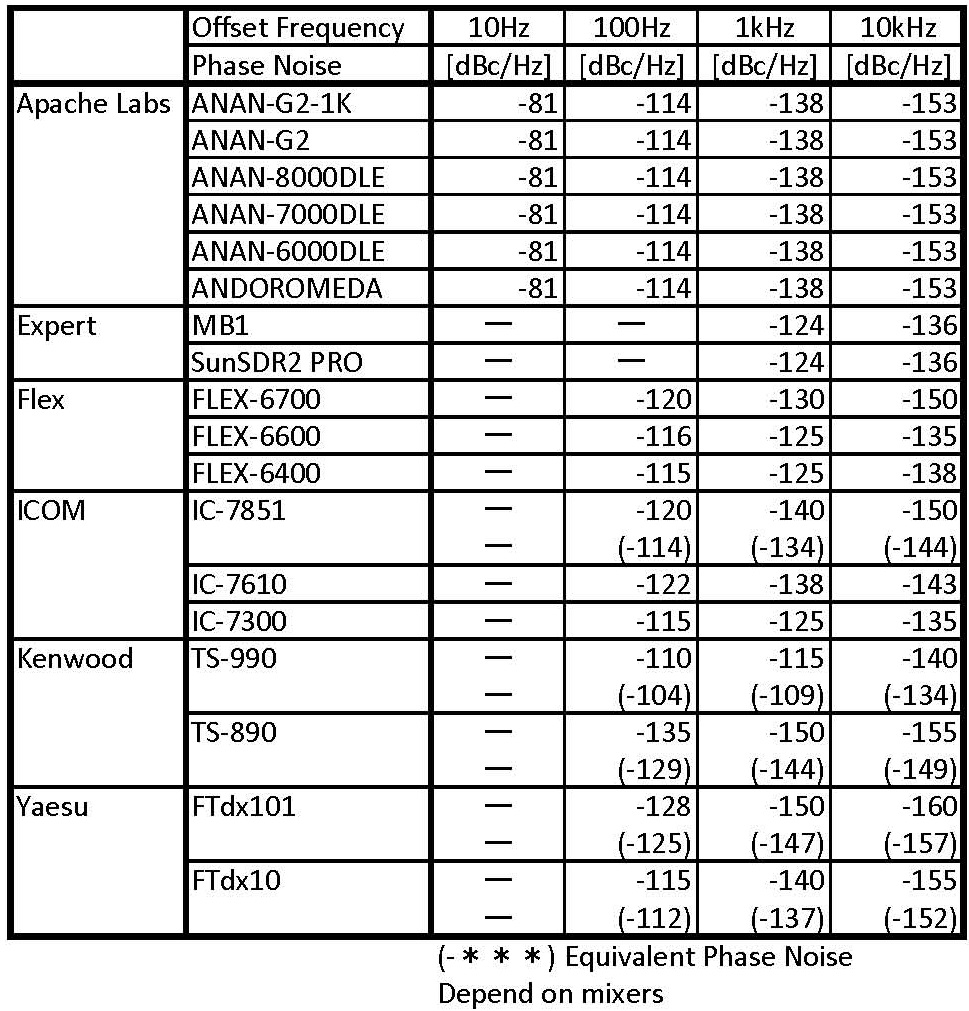
Table 3. LO or Clock Phase Noise Comparisons
- ①SSB Receiving and Transmitting
- Band width of Audio Frequency:300Hz~3kHz, SNR:>120dB
- Band width of Audio Frequency:10Hz~3kHz, SNR:>80dB
- If requires readability up and SNR more than 120dB then set to over 200Hz of audio frequency.
- ②If requirements of SNR over 120dB between 10Hz and 3kHz then use external Low Phase Noise 10MHz OCXO that requires less than -120dBc/Hz at offset 10Hz (Demand: -130dBc/Hz)
- This requirements establish to basic HiFi_SSB.
- 2) Basic HiFi_SSB depend on Low Phase Noise Local Oscillator or Clock Oscillator
- ①Low Phase Noise requirements of Local Oscillator or Clock Oscillator
- Use with external 10MHz Low Phase Noise OCXO and refer to table 4.
- ②SNR is more than 120dB that between 30Hz and 3kHz)
- ③Audio Frequency Straightness requires less than 0.5dB (This between 30Hz and 3kHz, those based on 1kHz )
- ④THD less than 0.01% (-80dB)
- ⑤Transmit IMD les than -60dB (Requires Predistortion)
- Satisfaction conditions of above ① to ⑤ then establish HiFi_SSB
- ・
- 2.Equipment used
- 2-1.External Low Phase Noise 10MHz References
- 1) FTS 1000B is special disciplined by GPS in the FTS 1050A
- 2) BVA 8607-08 is special disciplined by GPS and multiplying to 10MHz

Table 4. Phase noise comparisons
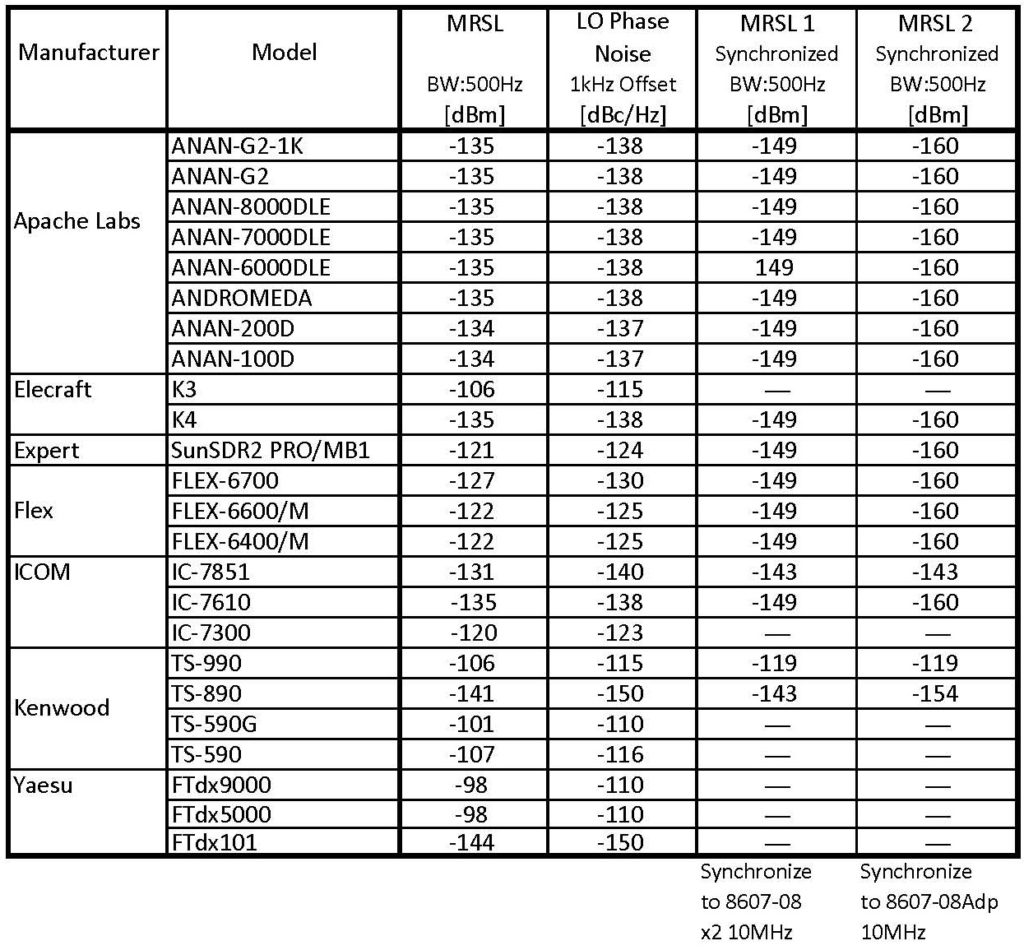
Table 5. Phase Noise Improvement: Sync to Special Disciplined OCXO (For Reference)
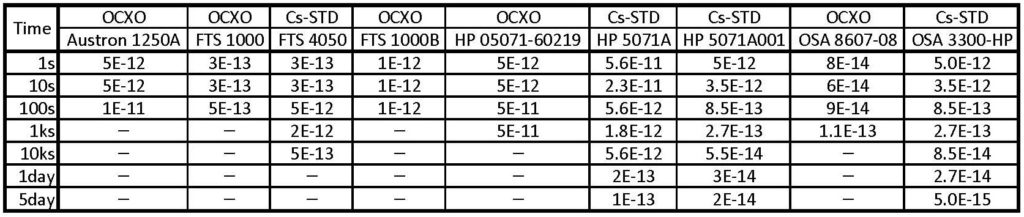
Table 6. Frequency stability comparisons
2-2. Audio interface
1) Steinberg AXR4T : Thunderbolt 2 audio interface
- Thunderbolt 2 audio interface have data transfer speed 20Gbps and very low latensy.
- Input and Output: Analog 600Ω balance, ADAT, S/PDIF, AES/EBU and word clock.
- The hybrid mic preamps with Rupert Neve Designs SILK emulation add exceptional tonal control.
- Word Clock Jitter depends on internal SSPLL or inhouse external referance and clock up to 384kHz.
- I would like to use inhouse external referance which consist of low phase noise and high stability BVA OCXO OSA 8607-08 special desciplined by GPS, connected word clock generator and set to 48kHz.
- This system used ASIO depend on Control and not through Carnell Mixer.
- PC for windows requires thunderbolt 3 or 4 I/F and high performanace.
- Under the circumstances CPU Intel Core i9 12900 or Core i7 12700 and mother board includes thunderbolt 3 or 4 I/F that one example is GIGABYTE Z690 AORUS XTREME.
- SSB transmitting and receiving system’s basic audio frequency response, dynamic range and THD depends on specification of AXR4T.
- Therefore, pure SSB sound and the highest possible audio quality.
・
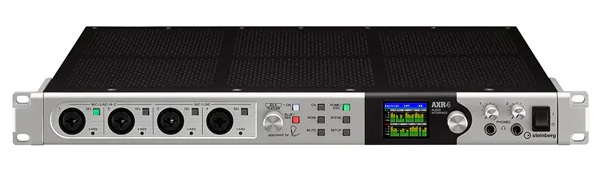
Photo1. Steinberg AXR4T Thunderbolt 2 Audio I/F
- 2-3. Microphone preamplifier and related referance
- 1) Microphone preamplifier
- ①Focusrite ISA430MKⅡ
- The unit is a comprehensive channel strip and mic pre comprising filters, parametric EQ, shelving EQ, VCA/optical compressor/limiter, gate, de-esser and 24bit ADC.
- Mic input: Analog 600Ω balance (Lundahl input transformer:LL1538)
- Output: Analog 600Ω balance, AES/EBU 110Ω balance and S/PDIF 75Ω coaxial
- Input and output: Word Clock 75Ω coaxial (44.1kHz to 194kHz)
- This connected to Word Clock Generator and set to 48kHz which synchronized to BVA OCXO OSA 8607-08 (Special disciplined by GPS (Private in house Time and Frequency Standard System)
- The unit is closely based on the original ISA 110 mic pre and subsequent ISA 130 dynamics sections originally design by Rupert Neve for George Martin’s Neve console.
- Sound of SSB transmission equivalent to specification of ISA430MKⅡ and Rupert Neve’s sound composing Lundahl input transformer LL1538.

Photo2. Focusrite ISA430MKⅡ
- 2) Graphic Equalizers
- Fundamental requirements of readerbilty and articulation score which used voice frequency allocation and set to 31 bands graphic equalizer unfortunatly does not includs ham radio transceivers.
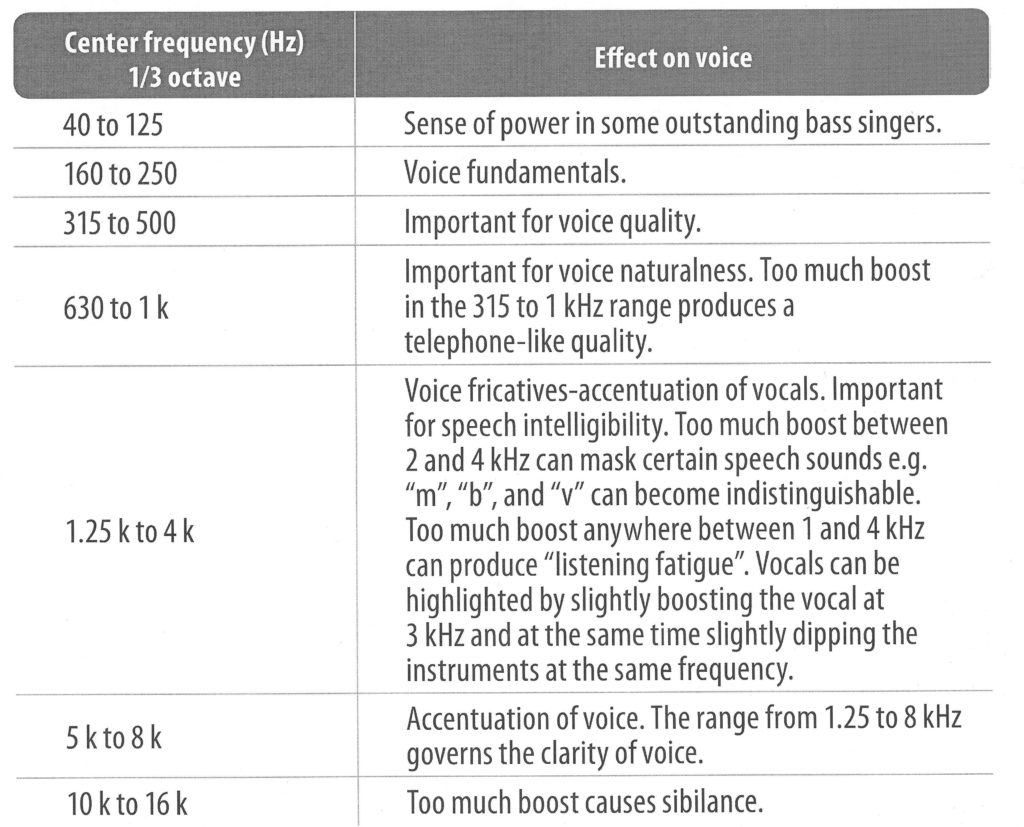
Chart 1. Voice frequency allocation
- For referance of articulation up microphone AIWA DM-47 which released in 1964 and refer to brochure as followings.
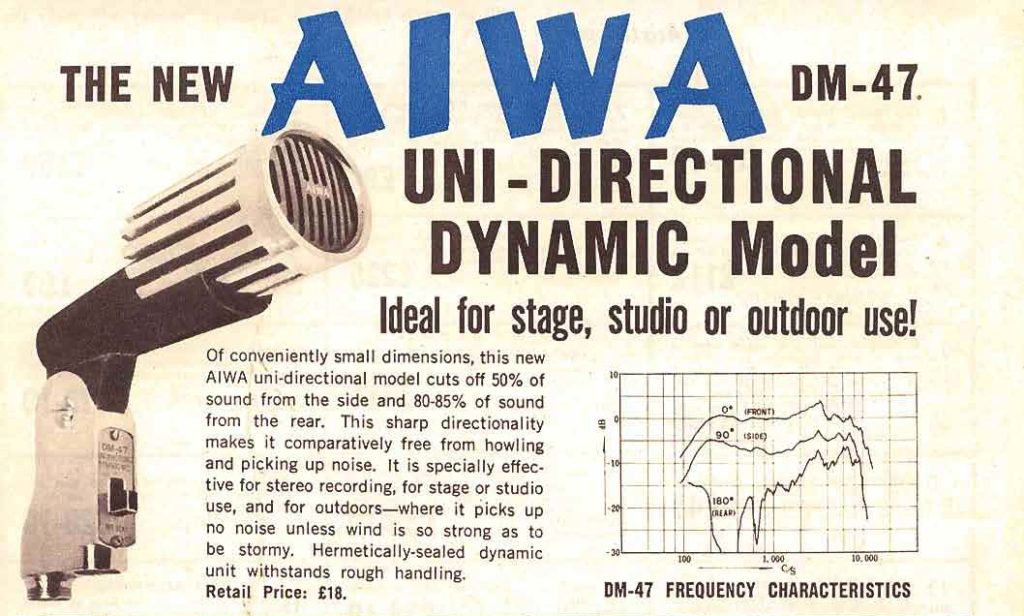
Brochure 1. Aiwa DM-47
- Please refer 31 bands graphic equalizers as followings.
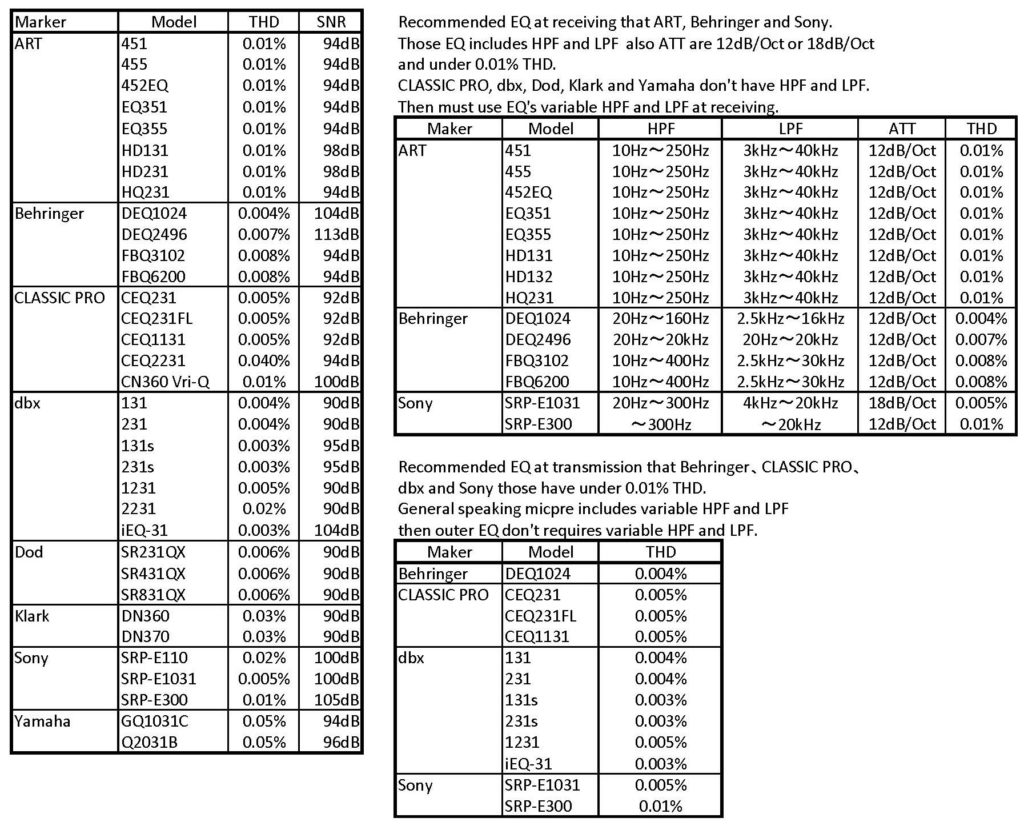
Table 7. 31Bands Graphic Equalizers Comparisons
- 3) Microphone used
- ①SHURE KSM353/ED Ribbon microphone
- This used Roswellite(TM) that carbon nano tube for ribbon.
- Frequency characteristic: 30Hz~15kHz(up to 18kHz)
- SPL: 146dB
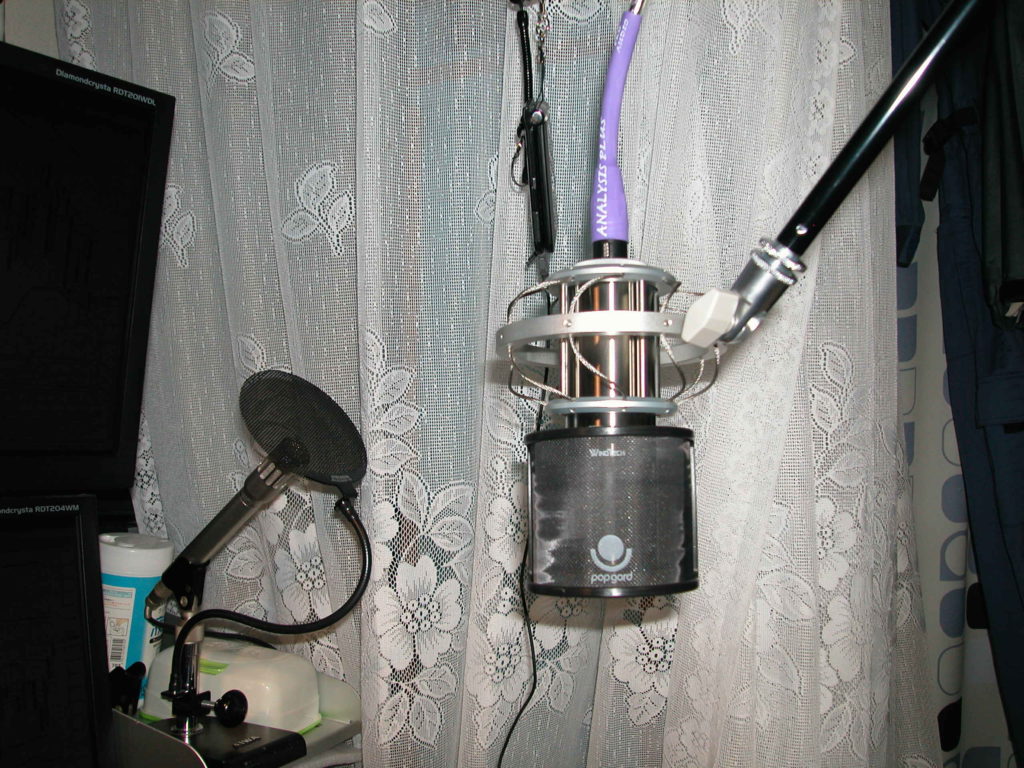
Photo 3. Shure KSM353/ED
- ② Scheduled to be updated
- Audio Technica: AT5047 Condenser microphone
- Frequency characteristic: 20Hz~20kHz
- SPL: 148dB
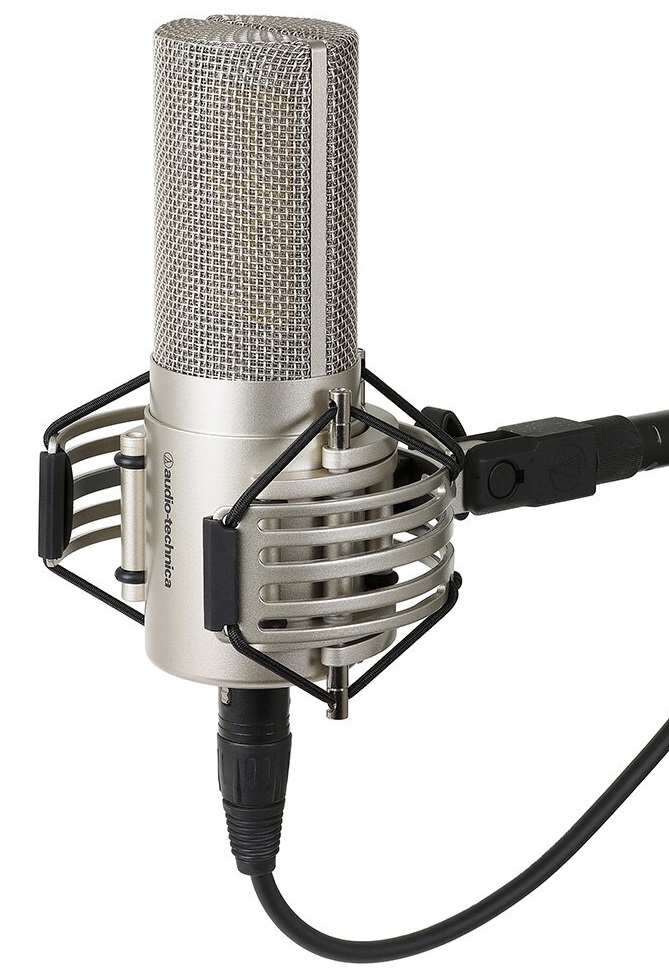
Photo 4. AudioTechnica AT5047
- 2-4. HF Transceiver SDR and Analogue Type
- 1) Apache Labs: ANAN-8000DLE
- Transmit IMD: <-70dB (-64dBc)
- AF system’s Input and Output: USB I/F or Thunderbolt I/F
- Synchronized to 10MHz private in house Time and Frequency Standard System
- 2) Racal RA3702 and MA3751+TA3762
- AF system’s Input and Output: Analogue 600Ω balance
- Synchronized to 10(5 or 1)MHz private in house Time and Frequency Standard System Operation and Control: Transceivers or Separate that controlled by micro CPU.
- 2-5.Others
- 1) Audio output power amplifier
- Sony SRPP-50 Output Power: 75W+75W(4Ω)
- Head Margin: >20dB
- AF Input: Analogue 600Ω balance

Photo 5. Sony SRPP-50
- 2) Connections for Analogue AF system: 600Ω balance
- Cable: Mogami 2534 (CP is most FB, better EMC and low noise depend on 2 pairs)
- Connector: NEWTRIK XLR and TRS (Recommend use paired of plated Au and plated Ag)
- 3) Digital AF(Audio Frequency) system
- ①Word Clock
- Synchronized to private in house Time and Frequency Standard System 10MHz
- Word Clock frequency: 48kHz, 96kHz, 192kHz, 384kHz and 768kHz, Jitter: <1ps (SNR:>154dB(~3kHz)) and normaly use 48kHz.
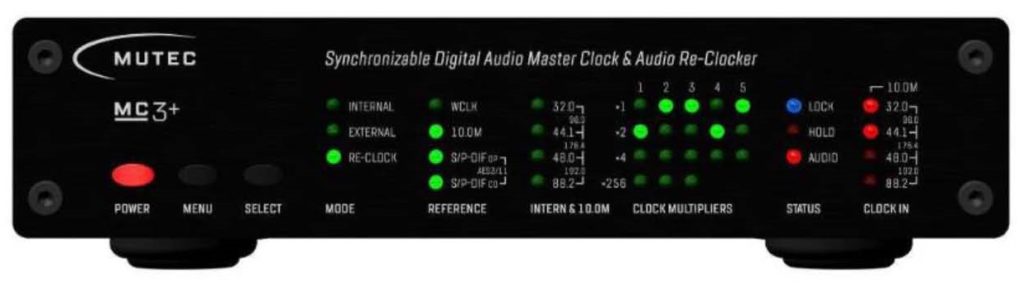
Photo 6. MUTEC MC-3+ Digital Audio Master Clock Generator
- Cable: Belden 1506A 75Ω coaxial (CP is most FB and better performance)
- Connector: CANARE BCP-A4
- ②AES/EBU 110Ω balance
- Cable: Belden 1696A (CP is most FB and better EMC compared to coaxial)
- Connector: NEWTRIK XLR(For AES/EBU)
- ③S/PDIF 75Ω coaxial
- Cable: Belden 1506A 75Ω coaxial (CP is most FB and better performance)
- Connector: CANARE RCAP-C4
- ④ USB and Thunderbolt Audio Interface
- USB 2.0 have data transfer speed 480Mbps and degraded latency.
- USB 3.0 USB3.1Gen1 have data transfer speed 5Gbps.
- Thunderbolt 2 have data transfer speed 20Gbps and very low latency.
- *Low latemcy requires thunderbolt 2 or 3 or 4 with high perfourmance PC and set to minmum samples of sound not cuts off.

Table 7. USB and Thunderbolt Audio Interface’s Transfer Speed & Data Transfer Speed comparisons
- ・
- LAN system requires low latency for above requirements and also described below.
- This LAN system using L3 switch (Switching Capacity: 128Gbit/s) with 4 SFP+/SFP Slot and 24 1G port those have 10G Slot:1.3μs, 1G Port: 2.5μs latency.
- L3 switch and L3switch connection using 10GBase-T SFP+slot with Cat7 30m PE LAN cable. And then connect SDR and WS_PC with AXR4T.
- This LAN system using L2 switch with 1G port (x 24) and have 3.2μs latency.
- ・

Fig.1. LAN System Flow Chart
- ⑥Optical Digital Audio Cable for S/PDIF
- If use this type of optical cable that SNR 68dB~114dB then I can’t use it.
- (I think that it is very strange for many Ham use this type of optical digital audio cable for EMC.)
- 4)Sound recording and sound reproduction
- It requires performance of Low Phase Noise(High SNR), Low THD and connected to Word Clock Generator and synchronized to private in house Time and Frequency Standard System.
- TASCAM DA-3000 Master Recorder/ADC&DAC
- Up to PCM192kHz and DSD2.8/5.6MHz, Word Clock input and output
- AF(Audio Frequency) input and output: Analogue 600Ω balance, AES/EBU 110Ω Balance, S/PDIF 75Ω coaxial
- ・

Photo 7. Tascam DA-3000
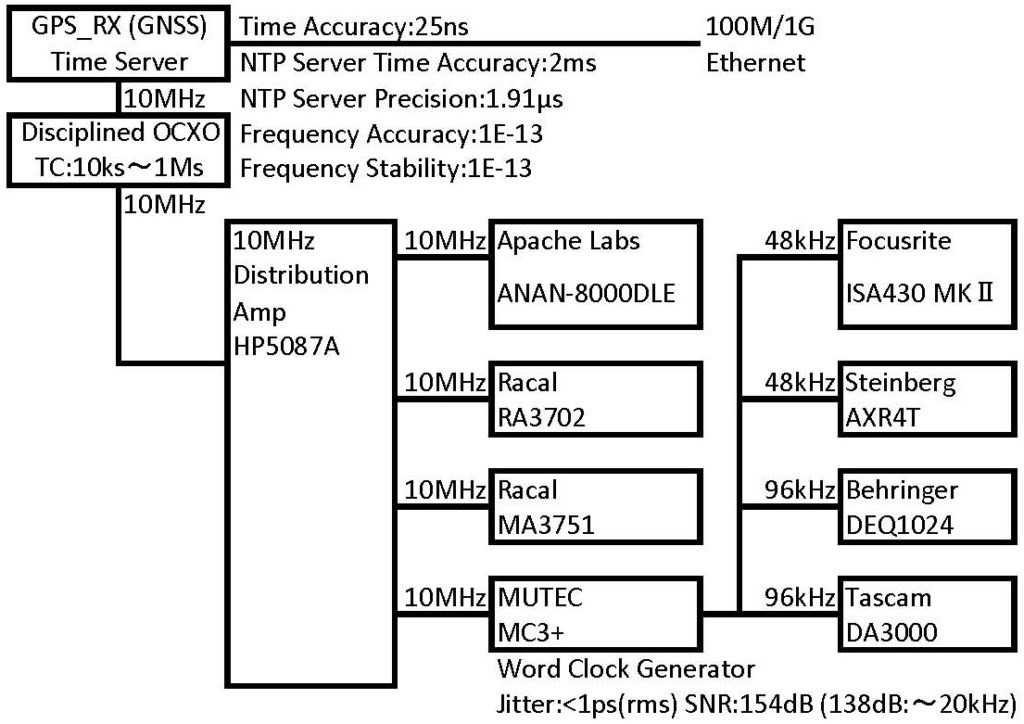
Fig.2. Frequency and Time Standard Flow Chart
- 5) Synchronized to private in house Time and Frequency Standard System.
- Please refer Fig 2 that private in house Time and Frequency Standard System (Extraction). GPS_RX used GNSS and have less than 1E-12 frequency stability and accuracy also time accuracy under 25ns and included NTP Time Server as under 2ms accuracy and under 1.91μs precision.
- This system use special desciplined by GPS that use high stability and low phase noise BVA OCXO OSA 8607-08, time constant between10ks and 1Ms and 5.8E-15 frequency resolution that performance have under 1E-13 frequency stability and accuracy.
- Frequency stability and accuracy those checked several times measured another GPS_RX that have 1.4E-15 resolution and 5E-14/72h accuracy.
- This system have distributed by HP 5087A and output distribution have 10MHz, 5MHz and 1MHz.
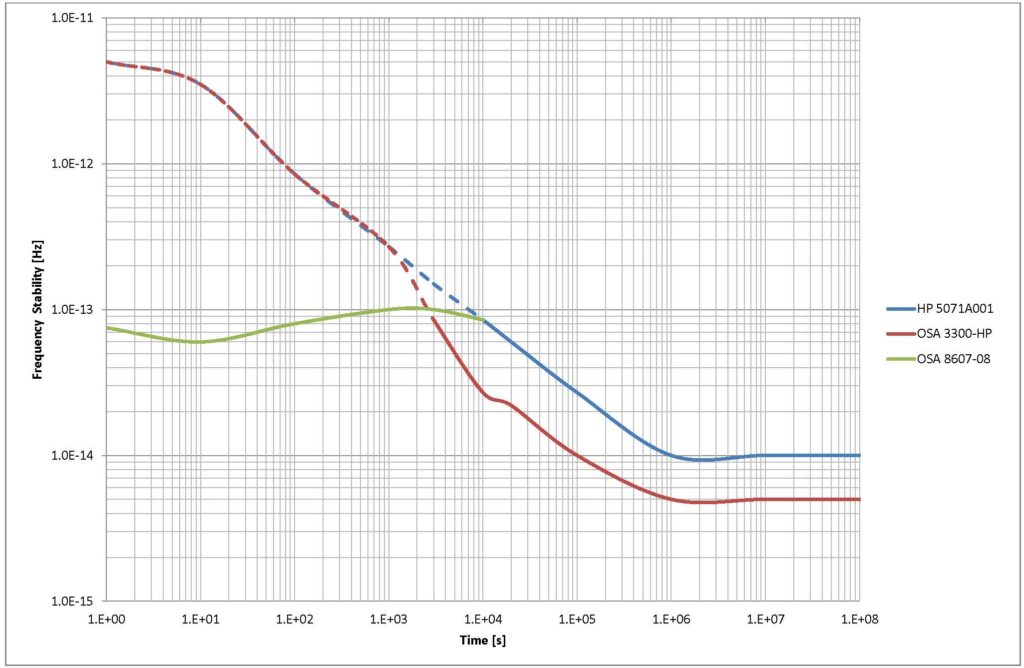
Graph.1 Frequency Stability
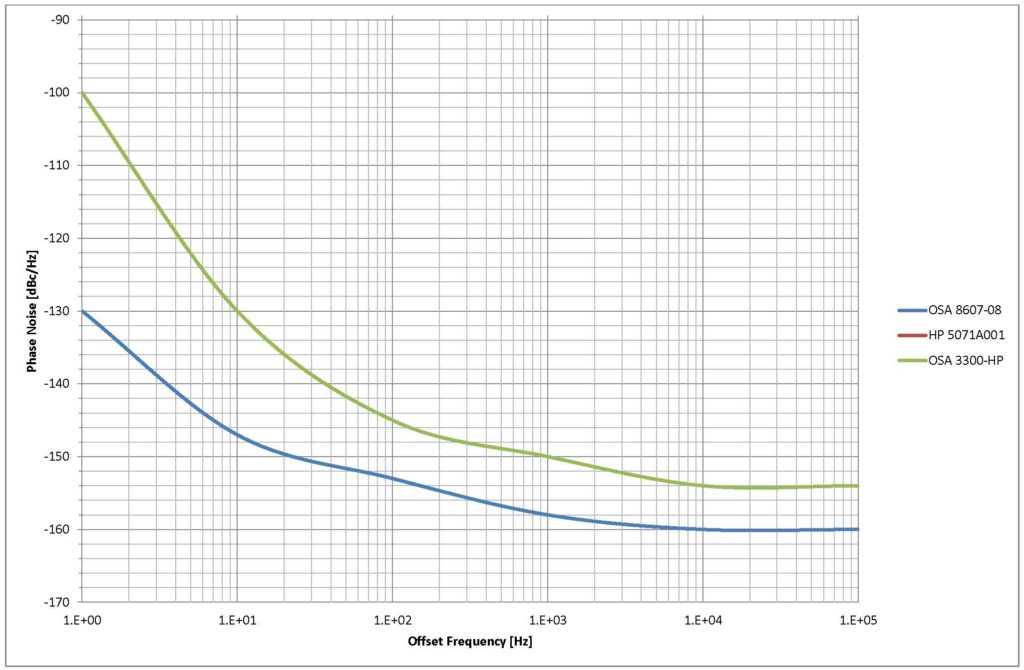
Graph.2 Phase Noise (BVA 8607-08 vs HP 5071A001)
・
If you have a question please E-mail to ja2gxu@cpost.plala.or.jp (@ → @)